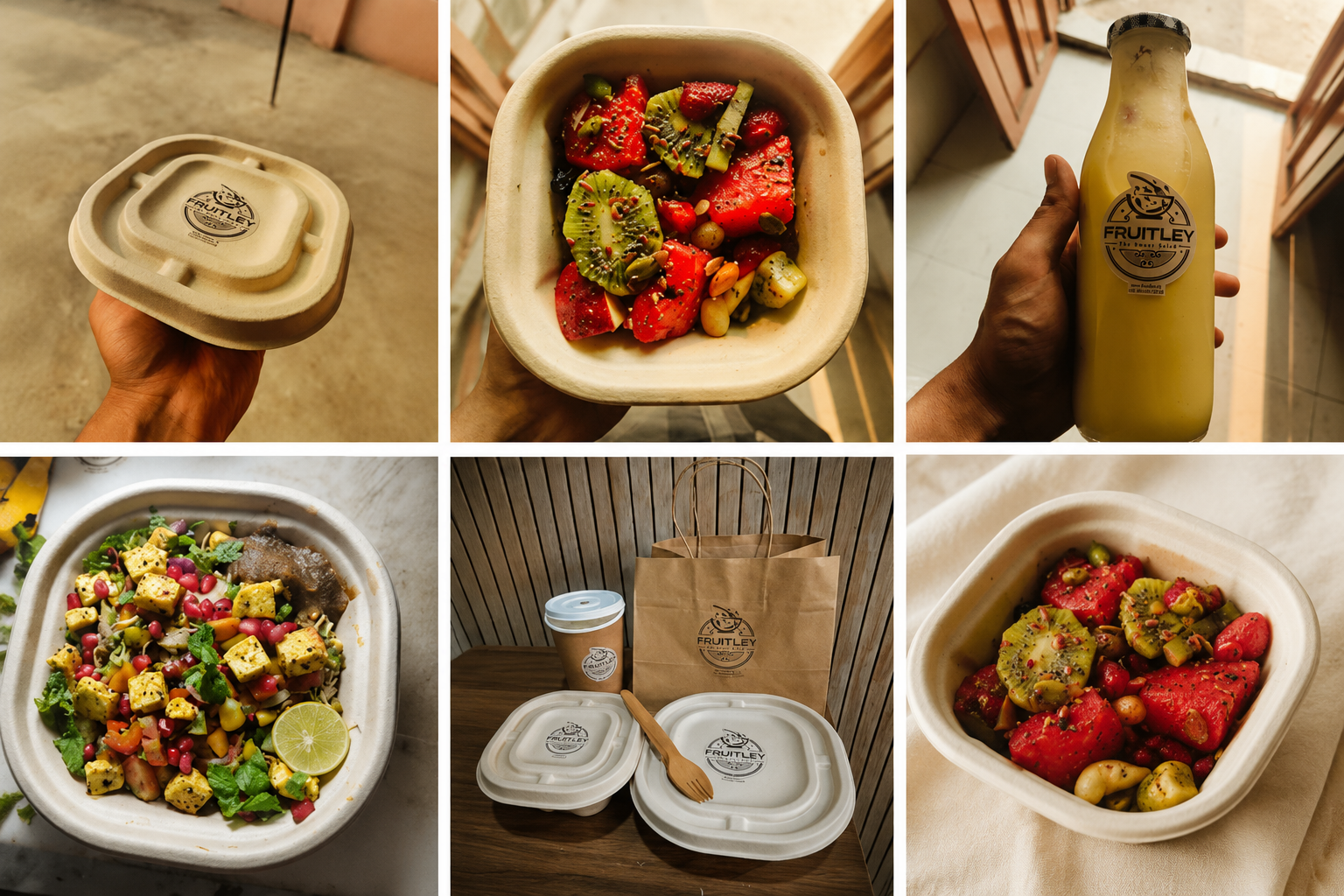
Summary
This is a story about building a real business — not just an app — where engineering, product, and operations all had to work at once.
Fruitley started as a simple bet: students and young professionals in Patiala wanted healthy food that was fast, fresh, and affordable — and nobody was serving it well.
As founder and PM, I owned it end-to-end: discovery, prioritization, and the metrics — then built the full-stack platform in Next.js and ran sourcing, pricing, and logistics. We served 1,400+ customers over 10 months.
The Problem We Were Solving
Healthy eating in Patiala meant a tradeoff: either bland, slow options or expensive delivery with inconsistent quality. Students wanted salads and fresh beverages that were affordable, quick, and the same every single time — a bar existing options simply weren't clearing.
How We Validated It Was Real
- Ran a small manual pilot before writing production code — real orders, real money.
- Tracked repeat rate and unit economics from day one instead of guessing.
What we learned:
- Consistency mattered more than variety — a tight menu beat a long one.
- Repeat customers drove the business; acquisition was cheap once quality was proven.
- A frictionless ordering flow directly lifted order volume and average value.
Building the Ordering Platform
I built the customer-facing platform in Next.js — an online menu, cart, order tracking, and customer accounts. The goal was a flow so simple a hungry student could order in under 30 seconds, then know exactly when their food was coming.
I followed familiar food-app patterns to keep the learning curve near zero, and shipped incrementally — every flow live before the next one started.
The Admin Dashboard
The part customers never saw — but the part that kept us alive.
I built an admin dashboard for real-time order and inventory management: incoming orders, prep status, stock levels, and daily numbers in one place. It turned chaotic lunch rushes into something we could actually run.
Owning Operations, Not Just Code
Alongside product and tech, I owned sourcing, vendor negotiations, pricing, and logistics. Building the software taught me the constraints; running the operations taught me which constraints actually mattered. That feedback loop is the whole reason the product stayed lean.
The Impact
What I Learned Over 10 Months
- An engineer's job is bigger than the codebase — it's understanding users, unit economics, and operations.
- The features that move the business are the ones tied to real metrics, not the ones that are fun to build.
- Building under constraints (no funding, small team) forces you to solve only what truly matters.